Canada Study Permit Requirements Guide for 2026
Studying in Canada begins with a course choice, but the immigration decision depends on much more than securing admission. Applicants need a genuine letter of acceptance, adequate funds, the appropriate provincial documentation where required and a credible plan to comply…
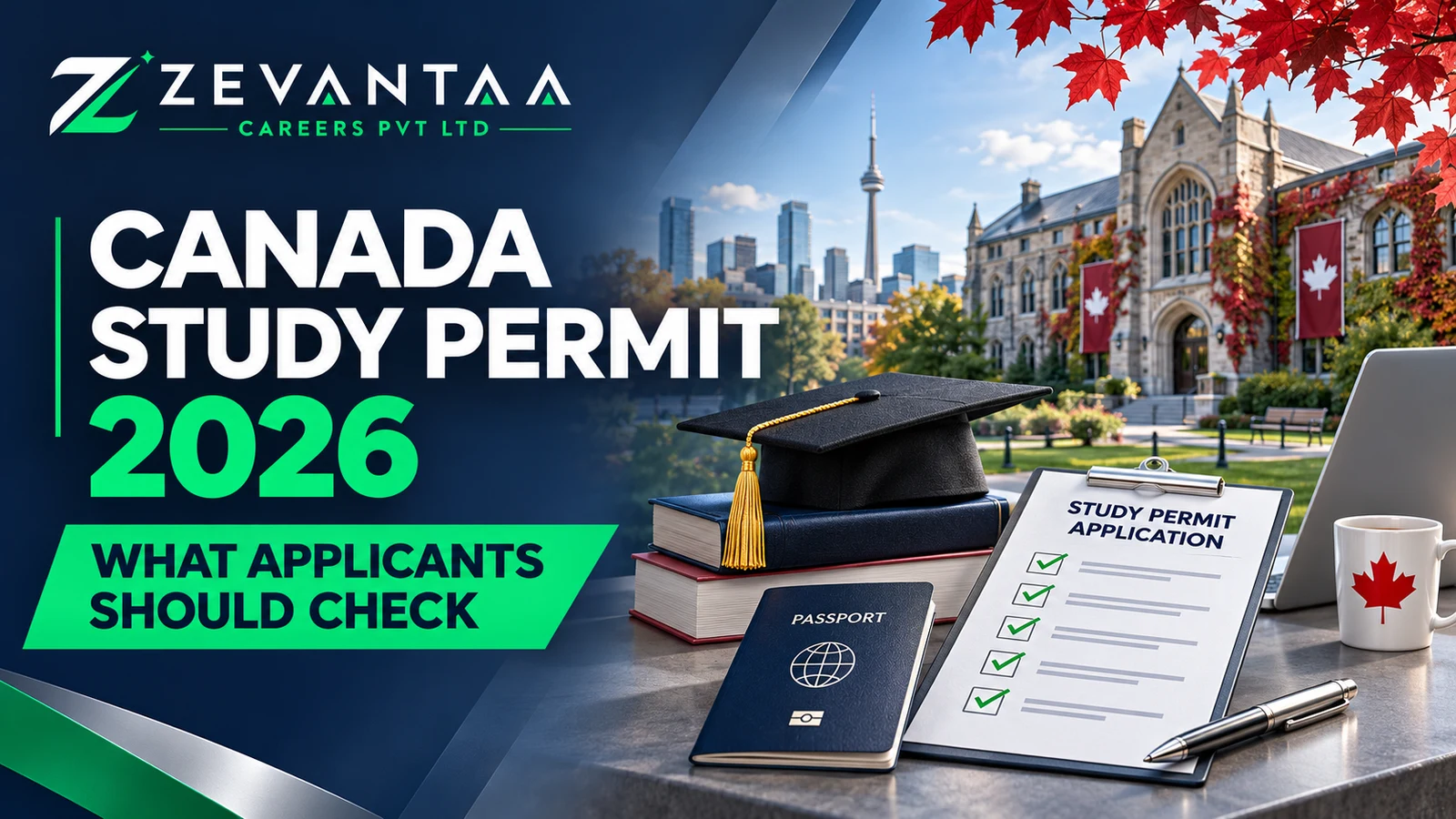
Studying in Canada begins with a course choice, but the immigration decision depends on much more than securing admission. Applicants need a genuine letter of acceptance, adequate funds, the appropriate provincial documentation where required and a credible plan to comply with the study permit conditions.
Canada updated important parts of its international student system in 2026. Certain public-institution master’s and doctoral students are exempt from the provincial attestation letter requirement, while the minimum living-expense amount for many applicants increased again in September. These changes can materially affect an Indian student’s preparations and should not be confused with separate post-graduation work permit rules.
Quick answer: What are Canada’s study permit requirements in October 2026?
Most applicants need an acceptance letter from a designated learning institution (DLI), a provincial or territorial attestation letter (PAL/TAL) unless exempt, sufficient funds for tuition, living expenses and transportation, a valid passport, and evidence supporting the purpose of study and admissibility. For one applicant applying from 1 September 2026 outside Quebec, IRCC lists CAD 23,448 in first-year living expenses, excluding tuition and travel. Applicants must also meet medical, biometric or other requirements where applicable. Official sources: https://www.canada.ca/en/immigration-refugees-citizenship/services/study-canada/study-permit/get-documents.html and https://www.canada.ca/en/immigration-refugees-citizenship/services/study-canada/study-permit/get-documents/financial-support.html
What is a Canada study permit?
A study permit is an immigration document that generally authorises an eligible foreign national to study at a Canadian DLI under specified conditions. It is different from a temporary resident visa (TRV) or electronic travel authorisation (eTA), which concerns travel and entry to Canada.
An approved study permit application does not guarantee entry: border officials assess admission when the person arrives. Nor does admission to a college guarantee immigration approval. IRCC determines whether the submitted evidence satisfies the relevant rules.
Choose a DLI and check the exact programme
A DLI is an educational institution approved by a Canadian province or territory to host international students. For post-secondary study, verify that the school is on IRCC’s official DLI list and record its DLI number. A marketing website or recruitment agent’s claim of ‘government approval’ is not enough.
There is a second question if the applicant hopes to work after graduation: whether the specific programme is PGWP-eligible. IRCC warns that not every programme at a DLI qualifies for a post-graduation work permit. Check the programme, campus and other eligibility criteria rather than assuming institutional designation is sufficient.
Official DLI list: https://www.canada.ca/en/immigration-refugees-citizenship/services/study-canada/study-permit/prepare/designated-learning-institutions-list.html
What is a PAL or TAL?
A Provincial Attestation Letter or Territorial Attestation Letter confirms that a province or territory has allocated a study-permit application place for an eligible applicant. A school generally arranges the document through its provincial or territorial process. Many applicants must include it with their study permit submission.
The PAL/TAL is not the same as a letter of acceptance, a study permit or a provincial nomination for permanent residence. Applicants should confirm whether their category needs one and obtain it before submitting if required. IRCC’s decision tool and exemption list are the authoritative starting points.
Official PAL/TAL page: https://www.canada.ca/en/immigration-refugees-citizenship/services/study-canada/study-permit/get-documents/provincial-attestation-letter.html
Who is exempt from PAL/TAL in 2026?
Starting 1 January 2026, applicants for qualifying degree-granting master’s or doctoral programmes at public DLIs are exempt from a PAL/TAL. Applicants at primary and secondary schools and certain other officially defined groups may also be exempt.
The exemption is not automatic for every postgraduate diploma, graduate certificate or private-institution master’s course. The level, degree type and public DLI status matter. Quebec-bound students can still need a Quebec Acceptance Certificate (CAQ) or other provincial documentation despite a federal PAL/TAL exemption.
IRCC public graduate guidance: https://www.canada.ca/en/immigration-refugees-citizenship/services/study-canada/graduate-student/how-to-apply.html
What changed to the 2026 student intake cap?
Canada maintains a cap on many study permit applications, with provincial and territorial allocations for non-exempt categories. The 2026 allocation notice introduced the public master’s and doctorate exemption as part of an effort to attract graduate research talent while managing broader temporary-resident numbers.
A national allocation or forecast should not be presented as a guaranteed seat at a particular college. Provinces distribute attestation places under their processes, and individual DLIs decide admissions. The availability of a PAL/TAL can be separate from academic acceptance.
Government allocation notice: https://www.canada.ca/en/immigration-refugees-citizenship/news/notices/2026-provincial-territorial-allocations-under-international-student-cap.html
How much money must a student show?
IRCC requires evidence that the student can pay first-year tuition, living costs and transportation, without relying on income from work in Canada. For a course longer than one year, applicants should also explain how they intend to fund the remainder of their studies.
For applications submitted on or after 1 September 2026, outside Quebec, the first-year living expense amounts in Canadian dollars are: one family member CAD 23,448; two CAD 29,192; three CAD 35,888; and four CAD 43,572. These figures exclude tuition and transportation. For five or more, consult the complete official table.
The preceding table was different for applications submitted between 1 January 2025 and 31 August 2026: one applicant needed CAD 22,895 in living expenses. Using that old amount for a new October 2026 application would understate the published threshold. Official IRCC figures: https://www.canada.ca/en/immigration-refugees-citizenship/services/study-canada/study-permit/get-documents/financial-support.html
How do Quebec financial requirements differ?
Quebec study permit applicants may need a CAQ and must meet financial requirements established by Quebec authorities. Do not use the federal outside-Quebec living-expense table as a complete Quebec eligibility calculation.
An applicant should review the specific CAQ and financial evidence requirements, together with IRCC’s federal study-permit rules. The institutions involved and programme type may also affect documentation.
What documents can establish financial support?
IRCC provides examples such as bank statements, evidence of an education loan from a bank, a guaranteed investment certificate where relevant, proof of paid tuition or housing, scholarship letters and evidence from a person or institution providing funds. The chosen documents should genuinely establish availability and lawful source of money.
Where parents or another sponsor are funding studies, explain the relationship and provide supporting financial evidence. IRCC can examine whether funds are truly accessible and whether the overall financial plan is realistic, including beyond the first year.
Example student budget for October 2026
Suppose an Indian applicant is admitted to a one-year programme outside Quebec with annual tuition of CAD 20,000 and an estimated CAD 1,500 in transport expenses. Adding IRCC’s CAD 23,448 living minimum yields CAD 44,948 as an illustrative first-year total.
This is a calculation example rather than an official programme cost or a determination that this amount alone satisfies the applicant’s full evidence requirements. Actual tuition, travel, insurance, housing and dependants can change the budget significantly.
How should the letter of acceptance be checked?
A post-secondary letter of acceptance should come from the genuine DLI and identify the student’s programme and relevant admission terms. Canadian DLIs participate in a verification process through which IRCC checks submitted letters, helping to prevent forged or altered admissions.
Do not purchase a purported college letter through an unverified intermediary. Independently confirm the school’s DLI listing, programme information, fees and contact details before paying deposits or submitting personal information.
What is the basic study permit application process?
- Identify a programme that fits the applicant’s education, career goals and financial circumstances.
- Verify the school and campus on IRCC’s designated learning institution list.
- Obtain a genuine letter of acceptance from the institution.
- Use IRCC’s PAL/TAL tool to determine whether an attestation letter is required and obtain it if applicable.
- Prepare financial records showing tuition, first-year living expenses and transport, including a funding plan for longer courses.
- Gather passport, relevant academic history, explanatory material, and local visa-office documents.
- Submit online through the appropriate official IRCC account and pay the published government charge.
- Complete biometrics, medical examinations or additional document requests if required.
- Wait for the decision and review any issued approval, travel document and study-permit conditions before travelling.
Official application instructions: https://www.canada.ca/en/immigration-refugees-citizenship/services/study-canada/study-permit/apply.html
How much is the study permit government fee?
IRCC’s official application guide lists CAD 150 for a study permit application, including extension applications under the listed fee category. Biometrics, where required, are a separate charge. Fees may be collected using different approved payment methods depending on the application process.
These charges are distinct from tuition, provincial documentation, medical exams, translations or consultancy services. Confirm the current amount in the official portal before payment. IRCC guide: https://www.canada.ca/en/immigration-refugees-citizenship/services/application/application-forms-guides/guide-5269-applying-study-permit-outside-canada.html
Can applicants still use the Student Direct Stream?
No. IRCC ended the Student Direct Stream (SDS) on 8 November 2024. New applicants from India and other former SDS countries use the relevant regular study permit process rather than an expedited SDS pathway.
Applicants should be wary of agencies advertising a new ‘guaranteed SDS approval’ in 2026. Existing requirements on documents, financial support and admission still apply. IRCC account information: https://www.canada.ca/en/immigration-refugees-citizenship/services/study-canada/study-permit-account.html
Is a study plan or letter of explanation necessary?
IRCC recommends explaining why the applicant wants to study in Canada and how they understand the responsibilities associated with studying there. Depending on individual circumstances and country-specific instructions, additional explanation or documentation may be relevant.
A useful statement connects past education or work with the chosen programme, its genuine academic value, realistic finances and lawful plans. It should not promise fabricated personal history, employment offers or guaranteed permanent residence.
How much can international students work?
Eligible study permit holders may work off campus for up to 24 hours per week during regular academic terms, and may work unlimited off-campus hours during scheduled school breaks when they meet IRCC’s conditions. A student can hold more than one job, but the weekly total during regular terms must remain within the permitted limit.
Work permission depends on enrolment and the study-permit conditions. Some students or programmes are not eligible for off-campus work, and authorised leave or changing schools while not studying may restrict work. A social insurance number is needed to work. Official details: https://www.canada.ca/en/immigration-refugees-citizenship/services/study-canada/work/work-off-campus.html
Why part-time work cannot replace financial proof
IRCC expressly requires sufficient financial resources without working in Canada. A hypothetical part-time job does not satisfy the initial funds requirement, and no employer is obligated to hire an international student merely because their permit permits limited work.
Budget for the cost of living and study before travelling. Earnings, if legally obtained later, can supplement finances, but they should not be described as guaranteed support for a visa application.
Does every course lead to a Post-Graduation Work Permit?
No. Eligibility for a post-graduation work permit (PGWP) depends on the institution, exact programme and the student meeting the applicable criteria. IRCC’s DLI database identifies institutions offering eligible programmes, while its rules can impose language or field-of-study requirements, particularly for certain non-degree programmes.
IRCC announced that the list of PGWP-eligible fields of study is frozen for 2026, but this does not mean every programme in Canada is automatically eligible. The official field-of-study page and the student’s specific programme details must be checked before accepting an offer.
Official PGWP field-of-study guidance: https://www.canada.ca/en/immigration-refugees-citizenship/services/study-canada/work/after-graduation/eligibility/field-of-study.html
Can students switch schools after arriving?
IRCC changed the rules governing post-secondary DLI changes. In many situations, an international student who changes their institution must apply for and receive a new study permit before starting at the new DLI, subject to the applicable exceptions.
The impact of an institutional change should be checked against current IRCC directions, the original permit conditions and the student’s exact course or status. Do not rely on older advice that a student can always change schools by merely updating an online account.
What about family accompanying a student?
Spouses, partners and children may require separate visitor, study or work authorisation, depending on their intended activities and eligibility. Spousal open work permit policies have changed and can depend on the student’s programme type, level and remaining duration.
A master’s or doctoral admission should not be treated as a blanket guarantee that every family member can work or receive a visa. Each applicant must meet the requirements for their own document.
Common Canada study permit application mistakes
- Using the pre-September 2026 living-funds threshold for a new application.
- Assuming a university or college acceptance automatically guarantees study permit approval.
- Confusing an LOA, PAL/TAL and study permit as the same document.
- Claiming the public master’s/doctoral PAL exemption for a non-qualifying private or diploma programme.
- Assuming every DLI programme is also PGWP-eligible.
- Relying on part-time work in Canada to meet the initial funds requirement.
- Submitting an application through an obsolete Student Direct Stream process.
- Believing all students can work 24 hours regardless of enrolment or permit conditions.
Frequently asked questions
What is the minimum living expense amount for a student in October 2026?
For one person applying on or after 1 September 2026 to study outside Quebec, IRCC lists CAD 23,448 for first-year living expenses, excluding tuition and transport.
Do master’s students need PAL/TAL in 2026?
Applicants in qualifying degree-granting master’s programmes at public DLIs are exempt from the federal PAL/TAL requirement from 1 January 2026. Other requirements, including Quebec-specific documentation where relevant, still apply.
Can Indian students apply for a Canadian study permit?
Yes, subject to admission to a DLI, suitable documents, financial capacity, admissibility and the other current IRCC rules. Indian nationality does not itself guarantee approval or a special processing stream.
Can I work 24 hours each week while studying?
Eligible students can work up to 24 off-campus hours during regular terms under the applicable conditions. Scheduled breaks can allow more hours, but applicants must check their enrolment and work eligibility.
Does a study permit guarantee a PGWP or permanent residency?
No. A PGWP is a separate application with its own institution, programme and applicant criteria. Permanent-residence pathways also have independent eligibility and selection requirements.
How Zevantaa Careers can help
Zevantaa Careers provides guidance relating to Canada migration and global mobility. Students can use a structured review of programme selection, DLI status, document readiness, financial evidence and the current application process within the service scope actually agreed.
Only IRCC decides study permits, and institutions decide academic admission. Zevantaa cannot guarantee admission, visa approval, student employment, PGWP eligibility or permanent residence.
Explore Zevantaa’s Canada visa and immigration services: https://zevantaacareers.com/visas/canada/
Official sources and editorial review
IRCC — 2026 study permit allocations and master’s/doctorate exemption: https://www.canada.ca/en/immigration-refugees-citizenship/news/notices/2026-provincial-territorial-allocations-under-international-student-cap.html
IRCC — PAL/TAL rules, validity and exemptions: https://www.canada.ca/en/immigration-refugees-citizenship/services/study-canada/study-permit/get-documents/provincial-attestation-letter.html
IRCC — Proof of financial support and September 2026 increases: https://www.canada.ca/en/immigration-refugees-citizenship/services/study-canada/study-permit/get-documents/financial-support.html
IRCC — Official DLI list and PGWP-eligible programmes: https://www.canada.ca/en/immigration-refugees-citizenship/services/study-canada/study-permit/prepare/designated-learning-institutions-list.html
IRCC — Study permit application steps: https://www.canada.ca/en/immigration-refugees-citizenship/services/study-canada/study-permit/apply.html
IRCC — Study permit official application guide and fee: https://www.canada.ca/en/immigration-refugees-citizenship/services/application/application-forms-guides/guide-5269-applying-study-permit-outside-canada.html
IRCC — Off-campus work rules: https://www.canada.ca/en/immigration-refugees-citizenship/services/study-canada/work/work-off-campus.html
IRCC — PGWP fields-of-study list for 2026: https://www.canada.ca/en/immigration-refugees-citizenship/services/study-canada/work/after-graduation/eligibility/field-of-study.html
Editorial review: Official IRCC sources checked on 13 October 2026. The CAD 23,448 outside-Quebec one-person living expense figure applies to applications on or after 1 September 2026. All amounts are in Canadian dollars, not indicative INR equivalents. The article gives general information, not guaranteed outcomes or regulated immigration-law advice.